
Digital Architect · Conscious Mind
Exploring Conscious Digitalization - where technology meets awareness
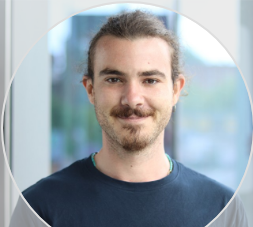
I am Timon, a technical consultant, developer, digital architect, but above all a human being from Germany and from this world.
Over time, I have learned that technology works best when it supports people rather than overwhelming them.
Today, I focus on how digital systems can be built securely, clearly, and sustainably for individuals, teams, and organizations that value conscious work.
Professional Experience - Architecture & Awareness
After my studies, I joined the professional field as an IT consultant,
focusing on digital transformation, cybersecurity,
and Identity & Access Management (IAM).
Working with diverse organizations - from SMEs to enterprise clients
I helped design and optimize secure digital infrastructures
that respect both efficiency and integrity.
Key areas of expertise:
- IAM Architecture: integrating federated identity and access management solutions.
- Process Security: ensuring access flows align with compliance and usability.
- Digital Transformation Consulting: analyzing systems, workflows and cloud strategies.
- Web & CMS Architecture: building sustainable, modular systems (e.g., TYPO3).
During my studies, this curiosity became tangible through two formative projects,
that shaped my understanding of Conscious Digitalization
🌾 Permaculture Bed Manager - Ecology as Code
In a small interdisciplinary team, I proposed and co-developed a full-stack web application using React and NestJS, a prototype for a “Bed Manager” that helps gardeners understand the relationships between plants.
Users could design virtual gardens in a 2D drag-and-drop interface, while an algorithm analyzed whether the plant combinations were compatible or not.
It began as a technical experiment, but grew into the idea of
a holistic permaculture platform that combines data, ecology, and awareness.
Our vision: to develop open digital tools that support regenerative design thinking- systems that learn from nature rather than extract from it.
🪴 Social Digitalization - A Community Platform for Youth
In another project, I worked interdisciplinarily with students from social studies
and the Diakonie Oberbayern, a large social welfare organization in Bavaria.
Together, we designed a digital community platform
for teenagers from different social institutions.
Its purpose was simple but powerful:
to offer them a safe, inclusive digital space to communicate, share,
and connect beyond institutional boundaries.
We focused on:
- privacy and psychological safety,
- empathetic interface design,
- and ethical communication tools.
The project became a living example of how social work and digitalization
can empower communities how technology can create connection, not distraction.
Projects
Projects where clarity, structure, and human-aware digitalization become tangible.
Handpan Karlsruhe
One-liner: Calm experiences need calm systems.
A local offering around handpan lessons, workshops, and sound journeys, presented with a warm, reduced identity and clear calls-to-action.
Outcome (in plain terms)
A website that guides visitors from curiosity → trust → booking, without overwhelming them.
MugicWave
One-liner: Structure can feel like freedom, when it’s built consciously.
A business that supports entrepreneurs with bookkeeping preparation, digital structure, and automation, framed as mindful companionship, not “classic assistance”.
Outcome (in plain terms)
A clear service system: visitors instantly understand what MugicWave is, who it’s for, and how to start.
How I work
I approach websites like living systems:
Clarity before optimization
Structural integrity before speed
Traceability before control
So the system stays understandable, even when it grows.
timontonon.com
Let’s build something that supports people, not noise. → info@timontonon.com
From Practice to Philosophy
My professional path and my early projects led me to a broader insight:
digital transformation is a cultural and ethical process.
That’s why I started developing the idea of Conscious Digitalization
an approach that unites systems design, ethical reflection, and research.
It’s not about reducing complexity, but about revealing it clearly
turning transformation into a form of collective learning.